
The In-Between Space: Craft, Hallucination, and History
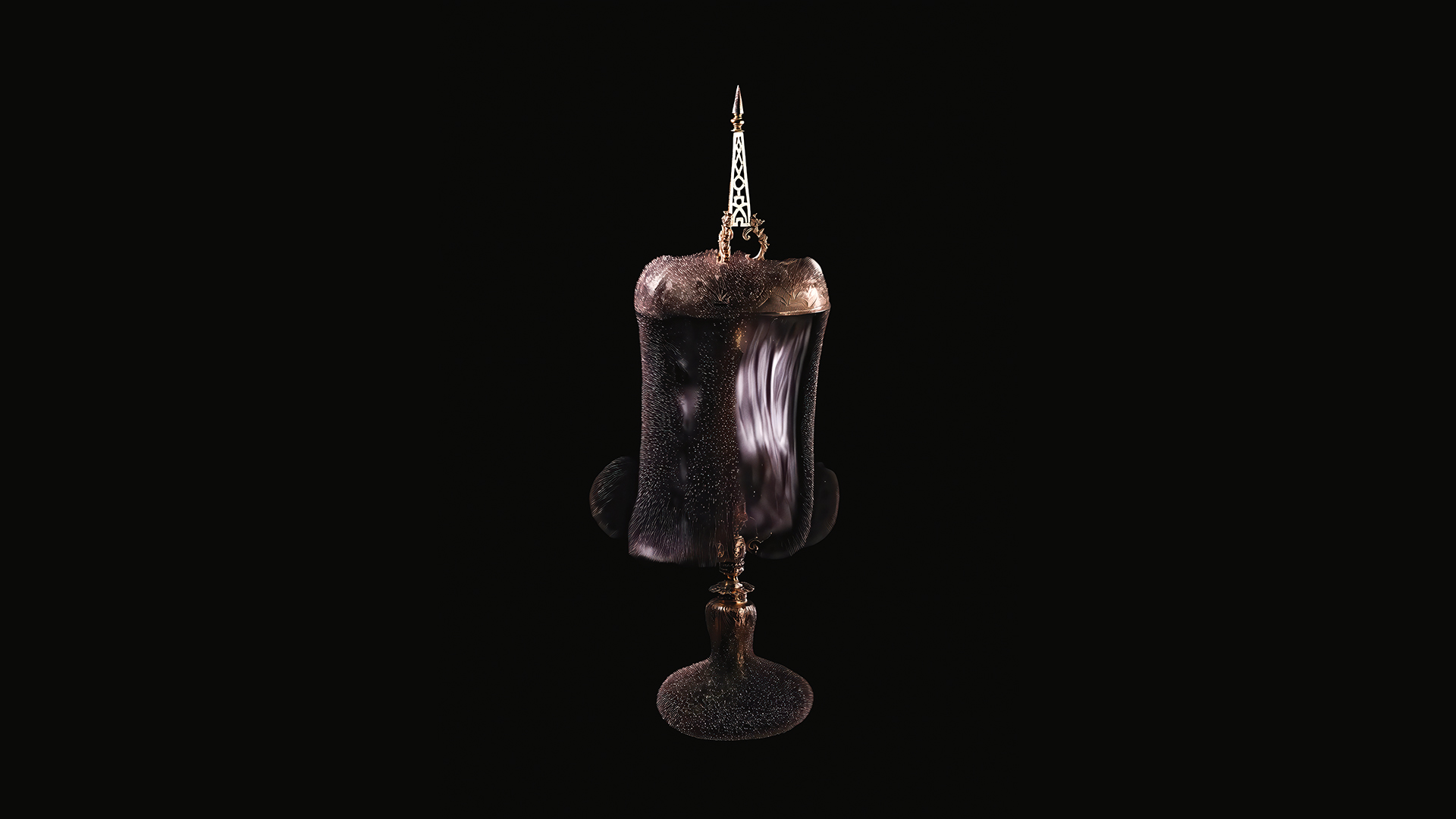
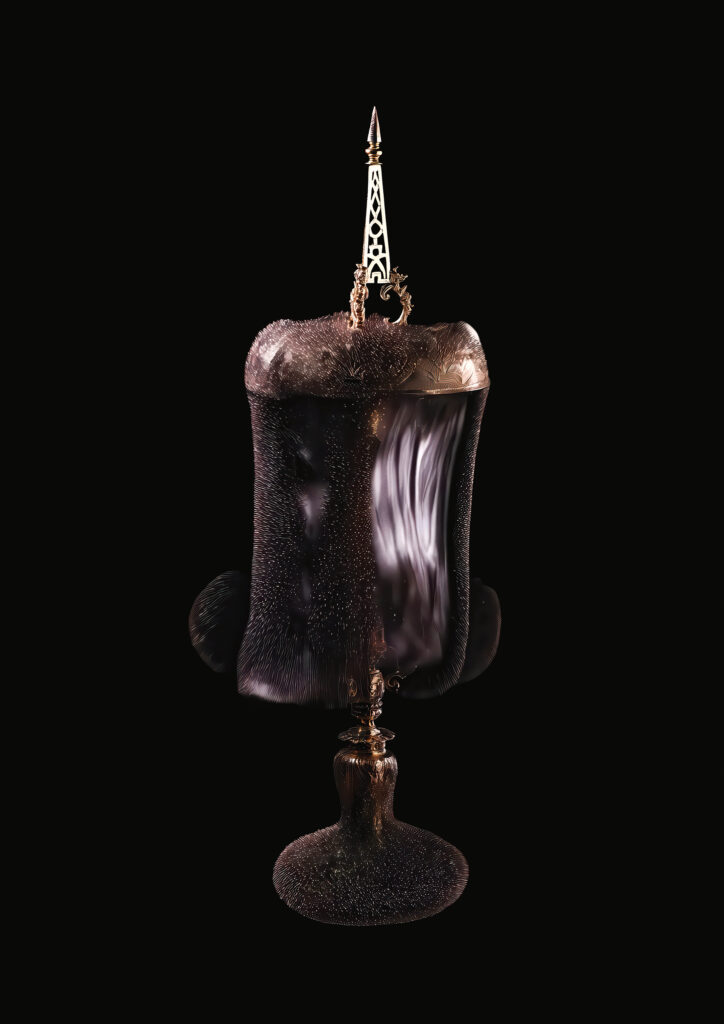
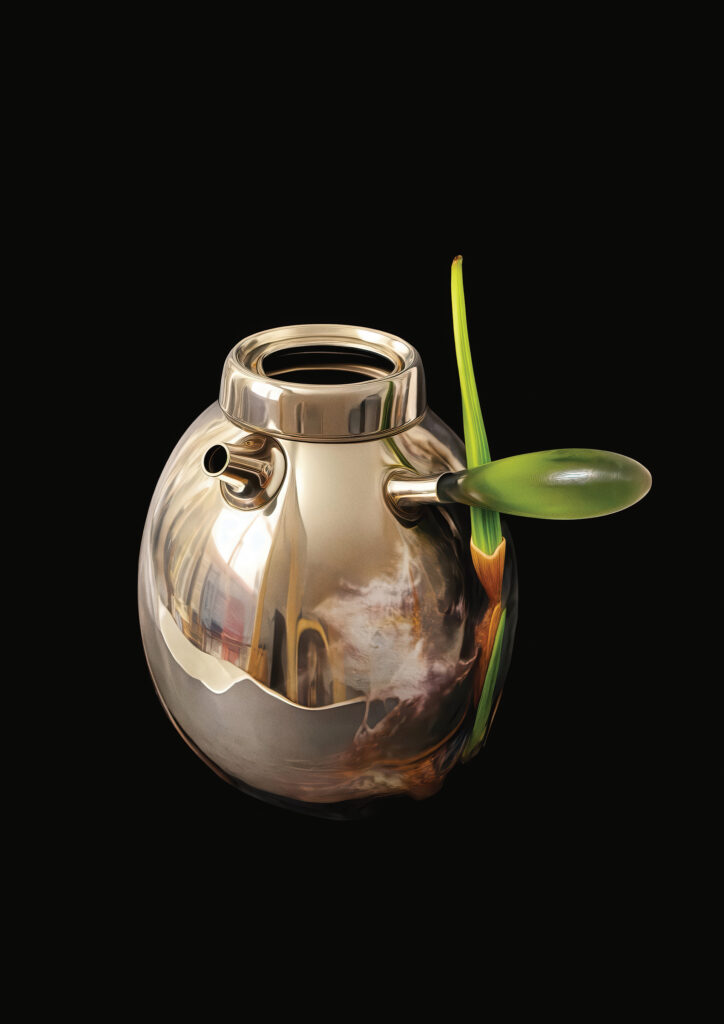
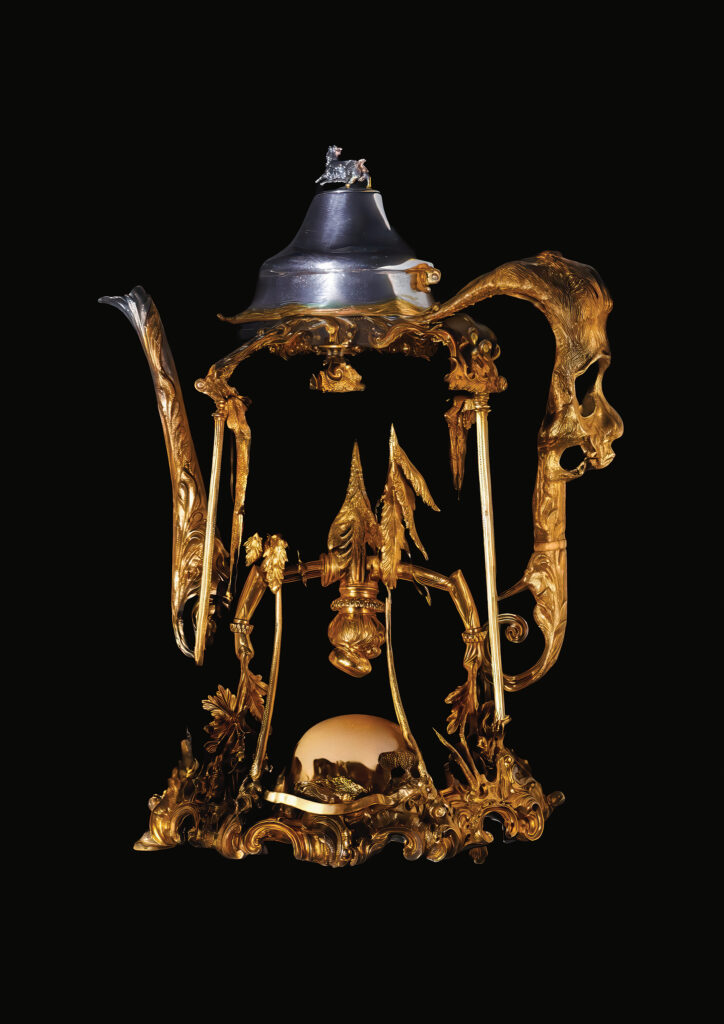
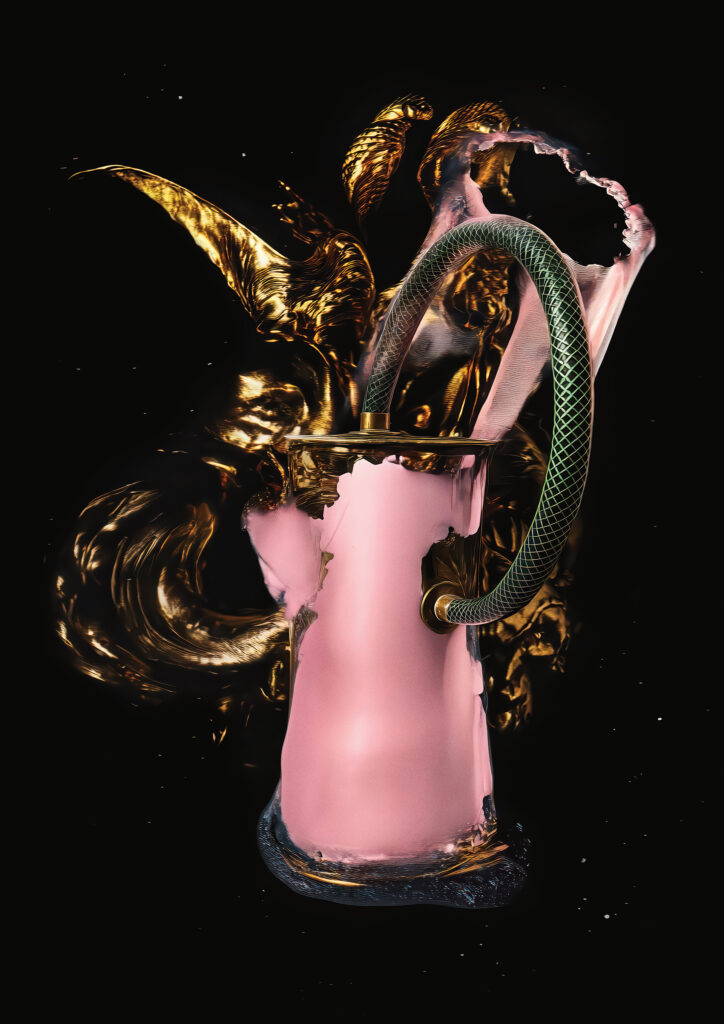
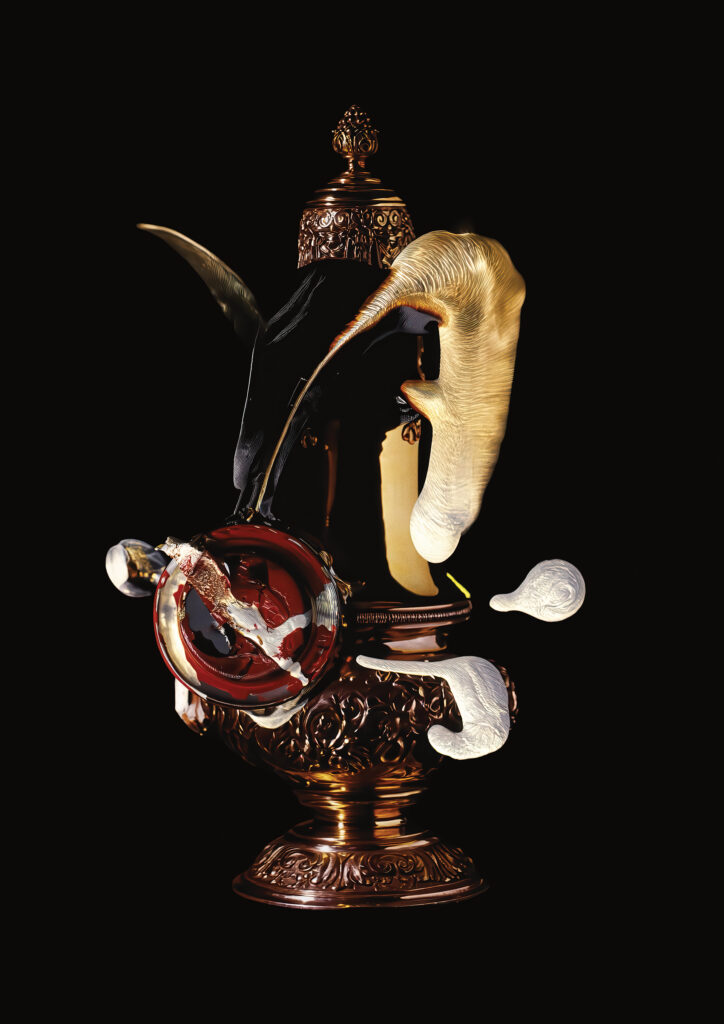
Black Box, an intervention by jeweller Silvia Weidenbach and artist Jon Emmony. The intervention brings together fine art prints, a physical installation, and an infinite film accompanied by an always-shifting soundtrack by Josie Child for an experience that is never the same twice.
In the winter of 2022, just weeks before ChatGPT triggered the current generative AI boom, digital image maker Jon Emmony and jewellery artist Silvia Weidenbach exhibited Infinite Loop at the Germanisches National museum in Nuremberg, a project that forced machine learning to confront the physical boundaries of jewellery design, resulting in the world’s first ring designed in collaboration with AI. Four years later, the duo have reunited to interrogate the historic archives of the Goldsmiths’ Company. Here, they sit down to discuss “AI slop”, Victorian spiritualism, and why true craft requires jumping into cold water.
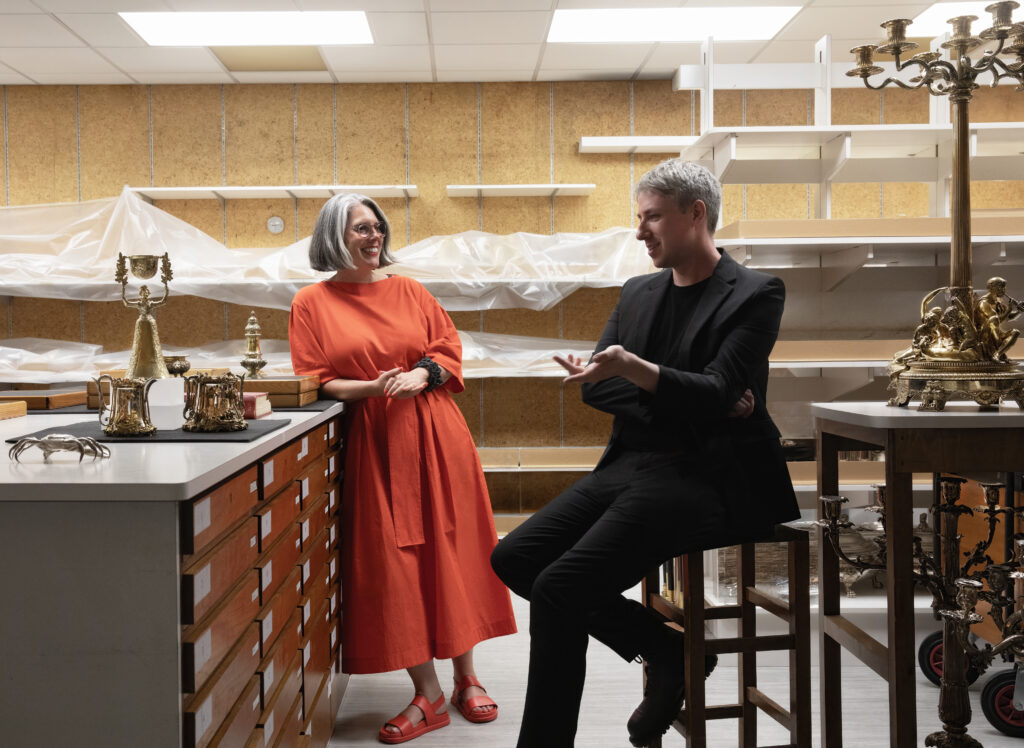
Jon: I want to open our conversation with a warning from the astronomer Carl Sagan. He once noted that we live in a society exquisitely dependent on science and technology, but almost no one actually understands how any of it works. That perspective feels incredibly urgent today. We are entirely dependent on these digital tools, yet we lack any real intimacy with them. They are black boxes.
With generative AI, people are now able to prompt things into existence without actually understanding the tools, the medium, or enduring the process of making. The journalist Jamie Bartlett, in his podcast Everything is Fake, argues that we are moving toward a frictionless world where a prompt replaces the process, and the human is completely detached from the act of making.
When you and I started this new project for the Goldsmiths’ Company, we wanted to explore the exact opposite of that. We looked at how data, machine learning, physical objects, and historic craft collide. Silvia, in an era where anyone can fake mastery with a single prompt, what is the role of true craft today?
Silvia: I love this context. We see more and more AI being used in contemporary design today. I often see young creatives using ChatGPT or image generators very early in their creative process to generate ideas or challenge their thinking. I don’t think that’s inherently a bad thing – it’s becoming a new creative skill in itself. What interests me is how we make sure these tools expand our imagination rather than replace our own curiosity and intuition.
A key issue for me is originality. If we rely too heavily on the same systems at the very beginning of the creative process, there’s a risk that many people arrive at similar kinds of solutions because they’re drawing from the same sources. AI can be an incredible creative partner, but I think it’s most powerful when it enters into a conversation with your own ideas, experiences, and instincts, rather than speaking before you’ve had a chance to develop them yourself.
That’s where craft still has such an important role. Materials have their own properties, memory, and history. They resist you, surprise you, and teach you things that no prompt can. That intuitive dialogue between the maker and the material is something I’m not sure AI can truly possess.
Jon: It speaks to a total lack of intimacy with our tools. We treat these programs like magic tricks, but it’s a complete detachment from the journey of creating.
Silvia: It changes how we value things. Making is still something the AI cannot truly do on its own. It cannot feel the resistance of a material. It cannot understand the weight of a hammer or how metal moves under heat. That is where the human element remains completely irreplaceable. When I look back at my own early silversmithing apprenticeship work from the early 2000s, which is actually part of this project, I had to physically make my own tools before I could even touch the silver. It required an intense understanding of the whole cycle: from a flat sketch to a 3D paper mockup, to forging the iron tools, to shaping the metal.
Jon: The paradox of AI is that you don’t need to understand the technology to create something with it. As someone who has championed digital technology and image-making for nearly two decades, my relationship with AI is complicated. I don’t want AI to do the parts of my job that I love doing. I don’t want it to make the picture; making the picture is the best part!
Silvia: So if we look at it that way, why use it? What is something positive about it? For me, what I love is the surprise, the uncontrolled surprise where you try something, feed the AI, and something completely unexpected comes out. It acts like a workout for your creative mind. It keeps you in a permanent state of flux so you don’t fall into a cozy, confident, lazy way of making and thinking. It keeps me active.
Jon: Let’s look at it from another perspective: the image of an object versus the object itself. We live in an age where we rarely encounter objects in a tactile way; we usually just see them online as flat images. But what does that do to the actual physical object?
Silvia: For my generation, training the eye required physical engagement, because there’s a German concept, Begreifen, which relates to physically grasping something to truly comprehend it. You need to see the reality to train your eye. Yet, even when you are in the physical presence of a precious object in a museum, it is often detached from you, placed on a pedestal, behind glass, inside its own bubble of reality. It is stripped of its original context as an everyday object someone once lived with.
Jon: Exactly. It becomes an image of itself because it’s no longer accessible to our hands. It reminds me of the Crown Jewels where you’re pushed past on a conveyor belt. Because AI can now manufacture entirely fake, convincing objects and scenarios, no image can surprise anymore. The machine can just manifest anything out of thin air.
That is why the context of our project with the Goldsmiths’ Company collection is so vital. These objects already live in tandem with each other within a real, physical archive. We’re working directly with the curators and historians to get a real understanding of the stories these pieces carry.
When we started working with all of this archival content, the very first step was that we went into the archive to photograph the objects selected by us and the curators with an Infrared camera. Infrared gives a very different view of the world to that of a normal camera, so it was important that we subverted how the objects looked from the start. I then gave you all of the photographic prints of the real objects, and you started manipulating them physically, putting paint on them, rather than using Photoshop or anything digital. Why was that tactile, spontaneous process so important to you?
Silvia: It was an intuitive, hands-on reaction to the physical objects. I wanted the speed of immediately applying colours and reacting in the moment – mixing different textures and materials like spray paint, chemicals,and acrylics right there on the print.
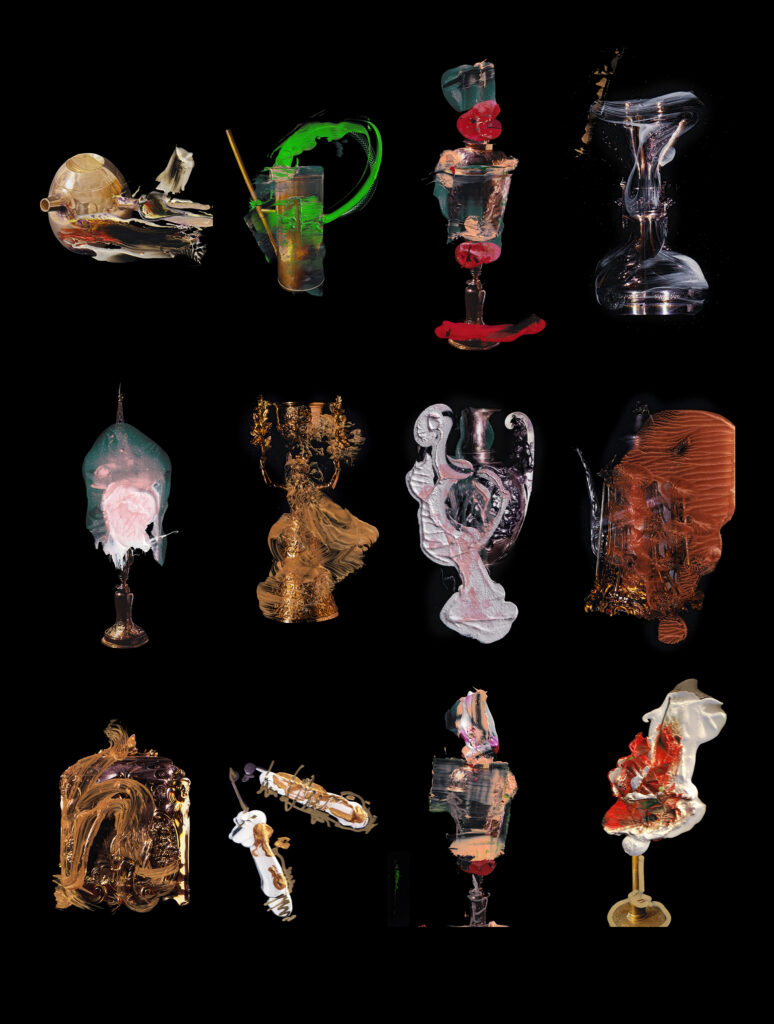
Jon: It was essential that you did that because as a maker, you brought a physical human touch back onto these images before we threw them into a virtual, algorithmic world.
When we encountered these historic objects in the archive, we met them in a very dark room, almost in a vacuum to protect them. But in their history, they would have reflected the sky around them. They would have reflected candlelight, dinners, and parties. We couldn’t change the physical objects themselves, but by physically painting over the printouts before scanning them back in, we were able to trick the algorithm into morphing between the real objects and your abstract variations. It allowed us to simulate the shades of life, because life is colourful and unexpected.
Silvia: The life is what is missing when these objects are seen in a vacuum. Painting them opened up a much bigger library of possibilities, fusing new inputs into old metal pieces to create a greater diversity of materials, colours and ornaments.
Jon: I remember right before we started this project, I brought a book of magic and stage illusions from the 1880s to our meeting. I was thinking recently about why I brought it to show you.
With everything happening at the moment, I feel like we are living through a modern echo of Victorian Spiritualism. In the Victorian era, after a period of immense death in the American Civil War and the slight decline of religion in general, people gathered in their living rooms to find ways to speak to the dead, looking to connect with something beyond themselves. Today, that is literally possible through technology. There are AI services trained to let your relatives talk to a digital persona of “you” after you’ve died. Prompting an AI is the 2026 version of summoning a voice from the ether.
It is no accident that the user interfaces of Large Language Models look exactly like a WhatsApp or text message exchange. It is intentionally set up to give you the illusion of a presence on the other side. But there is no one there. It’s just a mirror.
Silvia: Absolutely. People are isolated, disconnected from physical human engagement, and they treat AI like a psychotherapist, giving away all their personal data just to get unfiltered, pleasing feedback. It is incredibly spooky because you sit there and speak to a kind of medium, just like in the Victorian times, but you have no idea who is actually collecting that data or what it means for the future.
Jon: It makes me wonder how this philosophy applies to how the technology has evolved since Infinite Loop, our first project which utilised AI. When we were working on that project, the visuals coming out of AI were still hallucinogenic, ghostly, and painterly. And that’s why I liked it. I liked the brokenness of it.
Silvia: It felt appropriate because it was the beginning of our relationship with the tool. It looked beautifully naive, like working with rough casting processes or raw clay.
Jon: In our new installation for Goldsmiths’ Hall, we are interacting with this digital medium on multiple levels. The core film is driven by live code and a custom algorithm that never repeats. How does working on something that is endlessly morphing differ from creating a traditional film?
For me, when I make any moving image, I’m always thinking about creating a miniature world that you can investigate in real time. I’ve explored using game engine technologies, which enable you to create a virtual world and to move through them. I’ve never really seen filmmaking as something linear or timebased, because there’s no such thing as time in those virtual spaces.
When you take that as a core concept, it can become a very positive, inspirational environment. It reminds me of a beautiful documentary The Remarkable Life of Ibelin, about a young gamer named Mats Steen who suffered from a degenerative muscular disease and couldn’t leave his physical room. When he died, his parents discovered that he had lived an incredibly rich, empathetic life inside World of Warcraft as his avatar, Ibelin. To me, that shows the true, transformative power of virtual spaces. It allowed someone to experience freedom and human connection that their physical body denied them.
Silvia: I am fascinated by these kinds of formats and interfaces, even though I’m not a gamer myself. I remember when I did my MA in Goldsmithing, Silversmithing, Metalwork and Jewellery at the RCA and first started to work with 3D software, I wondered if I could create jewellery only for a virtual space, such as Second Life. Today, people adorn themselves virtually with Instagram face filters and digital assets. It’s a very interesting space.
Jon: In computing, a black box (the title of the installation) hides its inner workings. The user gives an input and sees an end result, but is unaware of how the computer got there. How much of our algorithmic outcome did we control, and how much did we purposely surrender to chance?
The reality is that when we walk into the exhibition room, we won’t know exactly what will be on the screen at any given second. But this wasn’t just a matter of taking pictures, putting them through an AI, and pressing a button. Everything is highly curated. When we first started working with the algorithm, its transitions felt very gimmicky, like a PowerPoint presentation. It’s always worth remembering that there’s no inherent sense of taste in technology; it doesn’t know what you’re trying to do.
Silvia: This is a key point. What could be the new aesthetic when we inject human taste? What I really liked about the morphing forms the algorithm generated was that you couldn’t link them to any existing era or technique. It was completely unknown, which forces you to think in a completely new way. If you were to translate these digital shapes back into reality, what materials or techniques would you even use?
Because the film itself is always morphing and never lands on a definitive look, we decided early on to manually freeze time and select specific moments as printed stills to display alongside the silversmithing objects.
Jon: Exactly. And to bring the voice of technology into the room as a storyteller, the physical installation features a dot-matrix LED screen. We’ve trained an AI on all the historical data around the Goldsmiths’ Company collection and asked it to continually think of new ways to describe the objects, sometimes practically, discussing a weight or technique, sometimes more poetic, describing the context of iconography or hidden meaning in the forms. But we’ve also explicitly asked the AI to lie and go off-script. When speaking to these large language models, it’s often unclear where training data comes from; it’s a murky, blurry source. We wanted to be honest about that fiction. The AI near the real-world objects will sometimes invent complete fiction around them.
On top of that, the film uses a layered object detection algorithm, the same code your iPhone uses to recognise a face. But we’ve dialed the recognition values all the way down to basically zero so that the AI starts to hallucinate.
This is really where the idea of the maker as dreamer comes in. We took a tool designed for absolute, cold precision and forced it to adopt a state of imagination. It’s exactly like a child looking up at the clouds and seeing shapes.
Silvia: It makes you think about imagination and originality. Can an AI truly be original? By forcing it to hallucinate, it becomes creative in itself. Sometimes it identifies a vase correctly, but other times it looks at a 700-year-old piece of silver and sees a skateboard or a bird. Everyone brings their own lived experience and preferences to an object, and this becomes a fantastic tool to stimulate a creative mind. It’s out-of-the-box thinking.
Jon: I love the idea that we’re using a state-of-the-art algorithm at the forefront of computer vision, but by intentionally removing its accuracy, we’re actually unlocking its creative potential. We’re subverting how you’re supposed to use it.
On the topic of materiality, remember that moment during the project where the AI was generating those “in-between” forms and it invented a hybrid type of gold? We both found it instantly repulsive. It looked so cheap. It was pure “AI slop,” just completely unconsidered materials. But seeing that ugliness actually teaches you how to curate. It shows you the ugly as well as the beautiful.
Silvia: Exactly. It forces us to build a completely new vocabulary to define what preciousness, quality, beauty, and ugliness mean today. We have different parameters now. AI can take a beautiful, historical collection of old objects and accidentally make it look incredibly tacky and calculated because it lacks human context and an understanding of value.
In my own work, I don’t believe in a strict hierarchy of materials. It depends entirely on how you treat the material and what idea you want to express. When something felt intuitively ugly in the algorithm’s output, we used that negative reaction to better understand our own standards of quality.
Jon: I think you can go into a project like this and revere history too much. It would be very easy to walk into a prestigious archive like the Goldsmiths’ Company, put the collection on a pedestal, and refuse to engage with it out of fear of disrupting it. But being fearless doesn’t take anything away from the original objects. They are masterworks. We’re just exploring them in a new way only possible with technology, using these incredible pieces as a new inspirational starting point.
Silvia: We don’t hide the history away in a dark safe. We bring it alive again, start a dialogue, and make it accessible and understandable for the now. There is a lot of unknown in working this way, but I am a curious, adventurous person. I like to jump into the unknown, even if I don’t have all the answers for where it’s going to go.
Jon: I agree. The best way to interrogate the technology is to immerse yourself in it entirely. It forces you to face up to those questions.
Silvia: Exactly. And you can only jump into the cold water like that when you are doing it with someone you completely trust. When we look at this project, or even back to Infinite Loop, it is so obvious that the technology is just a vehicle. The real engine is our friendship and our ongoing conversation. We’ve been talking, sharing ideas, and pushing each other’s boundaries since we met a long time ago.
Jon: It keeps us both creatively alive. And we really have to say, none of this would have been possible without the incredible openness of the Goldsmiths’ Company. To allow two contemporary creators to come into an archive with 700 years of history, to handle these precious objects, and to say, “Go on, challenge this, transform it, see what happens when you push it through an algorithm,” that requires an immense amount of trust.
Silvia: Absolutely. A huge thank you must go to the curators and the entire team at Goldsmiths’ Hall, especially Harriet Scott. They provided the vital context, the deep historical knowledge, and the absolute freedom we needed to make this project happen.
Image captions: Latent objects, taken from the in-between moments of morphing, either between archival pieces of the Goldsmiths’ Company Collection, or between an archival piece and an early 2000’s silversmithing work by Silvia Weidenbach.